Wednesday, November 01, 2006

Dying!


I have been going a little nuts because the dye vat of indigo is stalled out. I need to put the whole mess in a metal container and warm it for a while. I don't want to because it is going to smell awful. I did get a huge container of soda ash from the pool supply place. I cannot say it was cheaper, but I think it may be.

Instead of indigo, today is cochineal. I am working on the colors and seeing what will come of what I am doing. I started with an old sideless made of unknown material. I decided to use this as my test while I wait for one cotton broadcloth to dye and some silk to mordant. Alum is the mordant and I am doing an amonia rinse on the unknown fabric. I mean seriously, no big deal if this doesn't look great.

I started with my dye pot which was 4 ounces of ground bugs that were fermented for about 2 weeks. I intended to dye things within a day but my schedule got busy and I needed the big pot for other things. I plunked my disgusting blend of bugs into a strainer and kept all their nasty little bodies for more dying later.
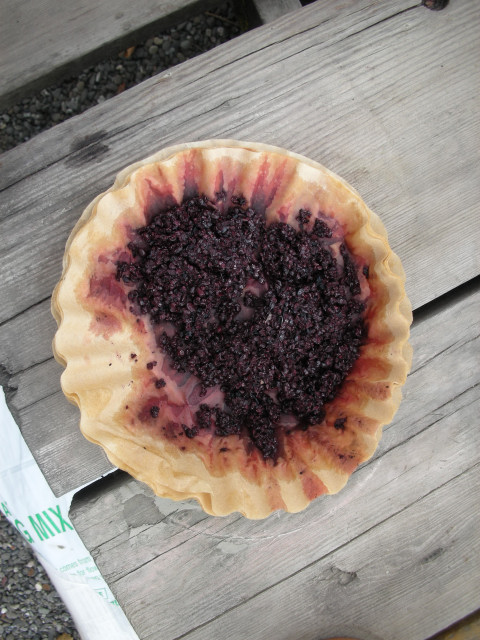
I can see they will have more life in them. The instructions for cochineal often mention they can be reused. They just have to be dried throughly and bagged. They will not be as strong, but as you can see here, they have plent of life left in them. Or dye that is, since they are especially dead after having been pried from their host prickly pear, dried, ground, boiled, fermented and drained.

One of my problems is this is a late period dye that I will be using on early period clothing. I am not too concerned as that only will be of concern to very informed folks. I am going to be embroidering on scraps of this dye lot for other dresses and probably will put a bit of wool embrodiery on the under dress I am doing for this particular piece.

I am also using rubber gloves to handle the material. This stuff is really chapping and drying out my hands. I think it is the alum. I am also handling very hot material as I am treating it twice. The fabric is simmered in the alum mordant and then I am swapping it right into the vat of cochineal.

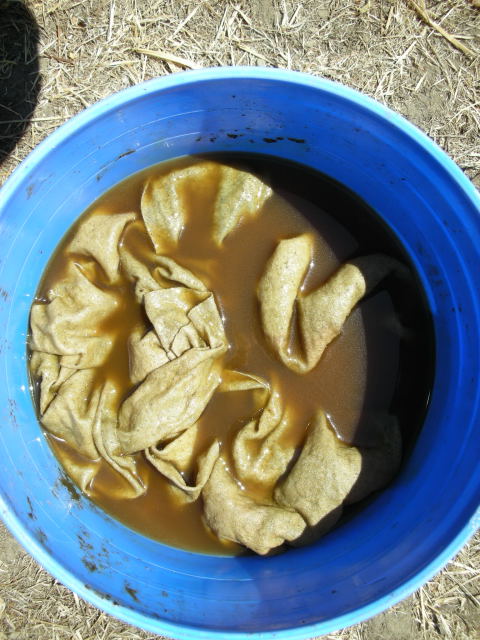
Here is the fabric in the vat.

Notice the deep, rose color? This is after about 10 minutes in the cochineal solution. It is developing and interesting color that I am very fond of, so I couldn't be more pleased.

This particular piece is two different fabrics. They both appear to be a cotton/polyester blend. I am not sure how well it will take the dye, but that is what experiments are about. The colors really changed by the time I took them out of the vat. You can see the difference in the colors of the two fabrics.
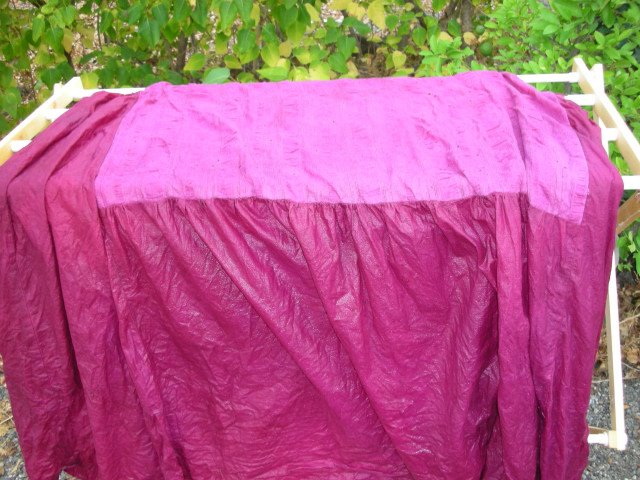


Then I put it through an amonia rinse. This is to set and alter the final color. I did this in the washing machine and now it is showing every little mistake in my dying. You really have to get in there and turn everything and rotate the fabric for even coverage. The end result wasn't quite as pretty as what I pulled out of the dye vat. You can see the mistakes and it isn't nearly as dark.
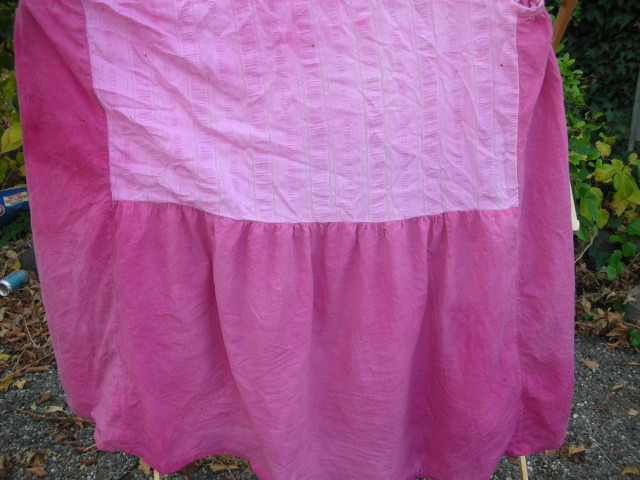
It isn't horrible though and it has far more character. The distinction between the fabrics is blatant though. I will take pictures of it on me after I find something to put on the sides.

Thursday, October 26, 2006

Evil Eyes!


I found cute documentation on these. Ward off the evil eye. I sat down with my torch and made 12 the first night. I am going to make more to give to my feast helpers as a thank you. They ranged as trade items between India and Denmark it seems. They were very popular in Turkey and still are. Plus, this is a great way for me to learn my rudiments.

Monday, October 23, 2006

Stuff that I did today....

the r
h

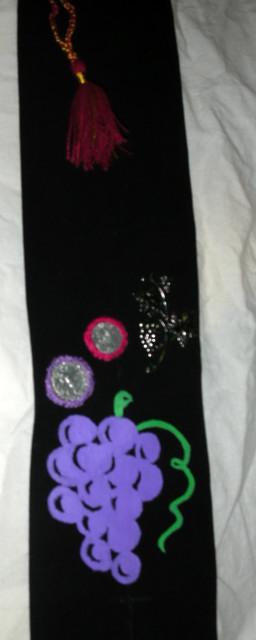
This is the new Baronial favor. The top is a tassle that Magge Nettlewood and Margaret Woodbury came up with for the feast that I autocrated. Tassles for camels. I thought they were festive, and wow.... That was insane. The two of them did it by themselves. I thought they were so spiffy. I never would have come up with something that good.

I come up with site tolkens that involve a draft and war rations. Unsuspecting Wolfscairners! I had half their barony drafted before they started yelling, "Hey!" Garth gleefully said we needed a war to fix it.

The two coins on the left are the coins Princess Oonagh and Prince Helgi the Dread gave us. That was nicer than being beaned in the head with a pillow.
The grape vine is from their Excellencies for being feast autocrat. Everyone seemed happy. That felt great.


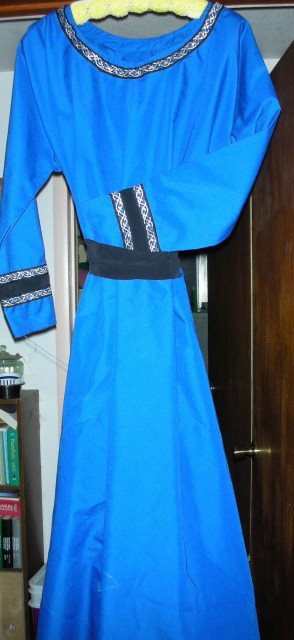
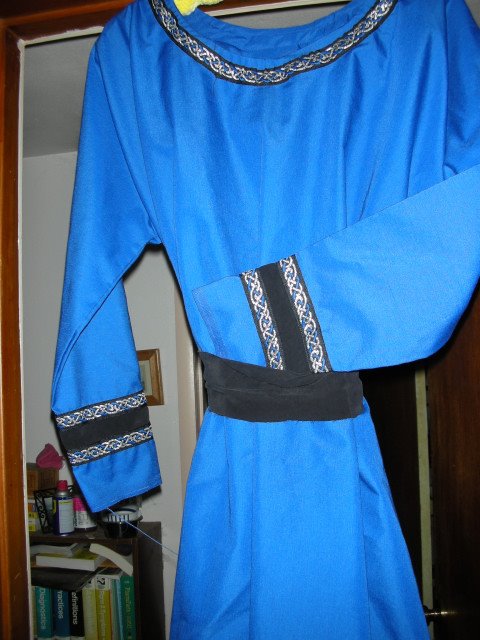
This is the dress I made today. I think it is the last working normans I can ever do. I will take more care and do my next rig right. Even dig out that jar of bugs and dye some fabric.


Thursday, October 19, 2006

Camel in Red Soup

The Redacted Recipe:

22 lbs of camel, cubed to 1 inch with the glands removed
1 pound of white butter*
9 onions, chopped
10 large carrots, in chunks
3 cups of honey
water or camel stock (I thought I would have bone in, so I would have roast the bones and then made stock from them. Instead we got boneless. )
1 teaspoon tragacanth gum or 1/2 cup of gluttonous flour
1 quart of yoghurt
2 teaspoons of kosher or tibetan salt
1/2 long pepper

Be very careful with the camel meat. I rinsed it twice and bled it off a bit. I rinsed and patted them dry twice. Then I cut up the meat. I think we had leg meat as the parts I thought I knew corresponded with the gland location on sheep or pigs. I saw one right away, so I was ultra careful about removing the glands. If you buy meat from a good butcher, they will do this to the large meat slabs. I started looking for them and removed all glands as I was cutting the meat in 1 inch cubes.

We then browned the meat in the butter. We used unsalted churned butter because that much
white butter would add about $16 in cost to the meal. We browned it in small batches in cast iron pans and the pot in order to get carmelization to take affect. The scent was pleasant at first but I found it got to smelling 'charred' right away. I think it is the sugar in the meat.

We then threw the onions in the extra fat from the browning of the meat until they were nice and translucent. We put those in the stock pot with the camel and added our carrots. Then we added the honey and enough water to cover it. We deglazed the browning pan with water and put that in the soup. We let that simmer for about 4 hours and then chilled it over night for the feast.

The next day we put the pot on simmer for the day. When it came time to prepare for the last course, I stirred the powder into the yoghurt. I then added as I was told, by gently heating the yoghurt in the ladle, then spooning in broth, then incorporating the yoghurt in little increments. Serve with more white butter on top and over or with steamed millet with onions.

*White butter is the fat off of whole, unhomogenized milk that is left to hang for about 2 hours. It cannot be substituted with salted butter, cream, half and half or oil. It can be substituted with unsalted butter, mutton or camel fat.

Tuesday, October 17, 2006

Recipes...

Katira asked for some recipes

Pigeon or Chicken Pie

2 lbs ground chicken (dark meat is better)
3 teaspoons thyme
3 tablespoons parsley, fresh
1 tablespoon white pepper
1 tablespoon fenugeek leaves, crushed
1 juniper berries, mashed
3 cups almonds (ground)
1 cups pinenuts, toasted and ground
2 lemons, juice of
1 teaspoon salt
12 teaspoon cinnamon
1 cup pomegranate mollasses
8 tablespoons unsalted butter, melted
3 large onions, ground
1 large carrot, ground
1/4 cup of rose water
3 cloves of garlic, groud
1/3 cups honey
1/3 cups water
9 leaves phyllo or mountain bread

Grind together the chicken, onion, garlic, carrot and the juniper berry. Melt the butter in one pot and melt the honey and water in another. Brush a tin with butter and lay in the mountain bread of phyllo. Brush that with butter. Repeat three times. Mix all the remaining ingredients and pack on top of the phyllo. Cover with three more buttered layers of phyllo and then one layer of phyllo that is brushed with honey water and bake for 25 minutes at 320 degrees.


Chelow:

3 cups basmati rice
9 cups water
2 tablespoons salt
1/2 teaspoon tumeric powder
1 teaspoon saffron threads
2/3 cup butter, clarified melted, unsalted or olive oil (see note)
1/2 cup of white butter (this is made only from the fat from the top of whole milk)

Wash the rice 4-6 times until it runs clear. Pick it over as needed. Boil the rice between 6 and 10 minutes at a full rolling, boil. Drain the rice. Steep the safforn in a tablespoon of boiling water. Whisk 1/4 cup of white butter, clarified butter and enough water to thin it (I am thinking 1/2 cup of water from the modern recipes.) Pour the butter mixture into the pot. Pat half the rice into the pot so it makes a shell, then mound the rest in the middle. Cover and cook it covered 8 minutes. Then turn it off. Sprinkle the rice with 1/2 cup of water. Get a dishtowel and wrap the lid of the pot, or put paper towels between the pot and the lid. Cook on low for 40 minutes or until golden crust forms. Now, our cooks decided to parboil this for 24 minutes instead of 6-10 so it got mushy and puddinglike. We only allowed 12 minutes for the crust.

Sunday, October 08, 2006

All Hallows Feast!!!

Here we go! This is the first dish I made from the feast. The interpretation is simple. I believe the mention (with no recipe) is from Perry. Enough folks are putting the information where I can get it and the artist formerly known as Anahita has been a huge help. Anyhow...

The dish is described as almonds and nuts boiled in honey. Remember those pigeon towers? This type of dish is a halwa or sweet from there. It is cute. There is not really a word for dessert. Halwa is a term of endearment for a girl or a sweet. There are many different types. A carrot and raisin pudding is one of the best known. They also did it with grains or shredded roots we normally would treat like vegetables. Ah, more medieval genius. I looked at both modern and old recipes and called or harrassed everyone I know. Poor Sam.

I decided to boil the honey to almost the hard crack stage.

It has to do with the sweets from the area I was studying. High sesame seed production and almonds, and known for a sweet a bit like medieval nut brickle. This is one of the few dishes in the feast that

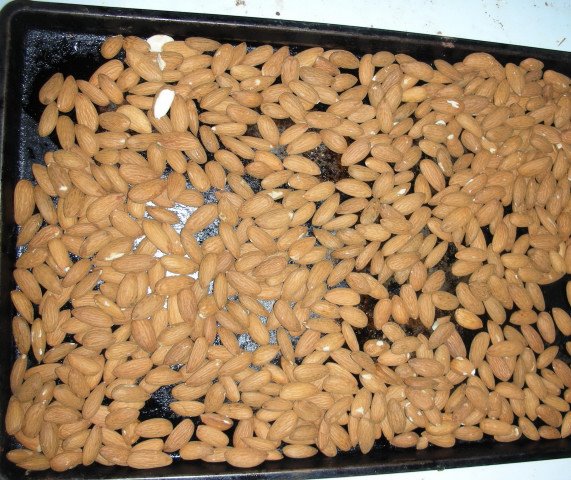
I boiled honey, milled sugar (yes, they had it), saffron, rose water, oil, a dash of kosher salt until it was nearly hard crack, then I pulled it off the stove and added the nuts and sesame seeds. Then I dropped it onto cookie sheets in about teaspoon sized lumps. It tastes wonderful and came out so pretty, that I wanted to show you.

Friday, September 15, 2006

The Pigeon Towers of Isfahan.


The pigeon towers of Iran will play a significant role in the feast I am doing.

From the url: http://archnet.org/library/sites/one-site.tcl?site_id=8372

Notes Hundreds of pigeon towers or dovecotes, dating largely to the Safavid reign, dot the fields in the vicinity of Isfahan. Distinct examples of secular architecture in Iran, these structures played an important role, much alike the subterranean canal system (qanats), in sustaining the hinterland that made possible an urban center at Isfahan. The turrets built with the purpose of collecting pigeon dung were a significant source of local revenue and were frequently decorated with white plaster and crenellations.

These cylindrical towers constructed of brick, gypsum, and lime plaster would range from 15 to 25 meters in diameter to often imposing heights of 20 meters or more. Topped with domes with crevices to allow access to honeycombed interiors, each pigeon tower could accommodate thousands of the Persian wild pigeon that could be harvested annually for dung to manure fields and soften leather in Isfahan's famed tanneries. Agriculture in the fertile but nitrogen lacking Isfahan plains was largely supported in this manner, and the legendary melons grown in the region were particularly dependent on this fertilizer. These structures have been deteriorating with little maintenance ever since they were rendered functionally obsolete with modern use of chemical fertilizers and tanning chemicals. There has been a significant drop in pigeon tower numbers from the thousands reported in seventeenth century accounts of Safavid Isfahan by French traveler Chardin, to the present day count of approximately a remaining hundred in the entire province.

Sources:

Hutt, Anthony and Leonard Harrow. 1978. Islam Architecture: Iran I. London: Scorpion Publishers, 171.

"Dovecotes, Esfahan". IranGardan Publication Website. http://www.irancaravan.com/Ih99.htm#Dovecotes. [Accessed February 13, 2006].

"Pigeon Towers". Isfahan Website at the Anglia Polytechnic University. http://www.isfahan.org.uk/kabutar/kabutar.html. [Accessed February 13, 2006].


Someone is saying there were as many as 3,000 of these pigeon towers outside of Isfahan during period. Even if it were only 300, it would provide an incredible amount of fertilizer. The towers were cleaned 1 time a year which is pretty common for a poultry cleaning. Archeologists seem to miss something about this. Modern poultry production safety requires that you were a full respirator when cleaning a cote or coop. Bird and bat feces tends to go airborn fast and the fecal dust has some pretty shitty things in it. The guy who cleans the coat had better be paid well because I know the hard way, that even with a respirator, you will be sick for a week after you do it. I would love to know their cote-cleaning fatality rates. Another variable to consider... I get sick far less often than my contemporaries because in part, I have an intimate relationship with organic life.

http://www.muslimheritage.com/topics/default.cfm?ArticleID=368

I need the book of agriculture. Must sleep. Post later.


Monday, September 04, 2006

Weather

Someone suggested I call the class "Waste Product Sciences".

The problem with "Waste Product Sciences" is that it wasn't waste. It was another product. It sort of conveys that all this stuff is waste and it really isn't. It is particularly interesting to run economic reverse projections on the amount of manure produced prior to the plague years in Europe. The weather pattern was significantly differnt in 1348.

People had to eat breeding stock to make up for their lack of calories in the normal harvest. It is really hitting home this year. We had a very odd year in California. I am a farmer by profession. My early bloom crops like almonds, cherries, oranges, early peaches, plums, apricots, apples and nectarines took a huge hit this year because the rain fell when they were blooming. This knocks the flowers off the trees and keeps insects from polinating the blossoms. Notice that it wasn't a frost, but rain at the wrong time of year that was the problem. Now in the 1340s we see a significant climatic cycle that basically compromises about 3-4 years of stored food. This year, I had one tree that produced peaches, 2 prune trees (prunus vulgaris "French" the imperial didn't go) , about 1/3 my normal apple crop, no pears, no cherries, no almonds, no oranges, good lemons, no other plums, no apricots and the grapes (cabernet) look good.

I am considering writing a first person naritive of what it would be like to have to live on this little. I would be slaughtering breeding animals in September.


BEST SITE OF THE WEEK::

http://digital.library.ucla.edu/immi/

Thursday, August 31, 2006

Ink Research

Links to internet research:

I found this advertisement from 2003, and I would like to look into human urine and bamboo.

a village lost in the wilderness of the huge Tibetan plateau, nestled between cliffs and whipped all winter long by an icy wind, which hides a unique rare pearl: its printing house." Here the Tibetans print their sacred manuscripts, using traditional hand methods to carve the wood blocks, make the ink, and make the paper. In Chengdu the group visits the memorial to Hsieh-Tao, whom the Chinese describe as the first lady papermaker. During the great Tang Dynasty (8th cent.) she created fancy designs in notepapers (this was the beginning of watermarks in paper),on which she wrote love poems. For another amazing papermaking experience, we drive to Fuyang, the largest center of papermaking in China for both handmade paper and machine paper. Here we visit a village inhabited by Cai Lun's descendants,who make bamboo paper by hand. And we see the unusual method of using human urine in the processing of bamboo. In Anhui Province we see papermakers producing the famous "Xuan" paper, revered by Chinese painters and calligraphers. They believe the handmade paper of Anhui surpasses all others. For details, contact Elaine Koretsky at the Carriage House Paper Museum, 8 Evans Rd. Brookline MA 02445, USA; tel: 1(617)232-1636; email: click here
http://www.paperhistory.org/arch_nws.htm

_______________

This is from an article on soil conditioning in the Ganges but I think I can use the information on an economic projection. It should tie in well with the theory on plague being worsened by weather and manure shortage issues. I have outputs for cattle and pigeons.

The daily per capita availability of night soil, human urine and nutrients contained in it is as under:

Particulars

Faeces (g)

Urine(s)

Quantity (natural condition)

133.00

1200.00

Quantity (dry)

30.30

64.00

Nitrogen

2.10

12.10

Phosphorus

1.64

1.80

Potassium

0.73

2.22

This data shows that night soil and human urine have a great manurial potential with regard to nitrogen, phosphorus and potassium. Due to this potential, it is considered good manure by the farmers.

http://www.fao.org/docrep/x5672e/x5672e03.htm

_________________________

Nevertheless, Egyptian toothpaste was more pleasant than that used by the ancient Romans. Roman toothpaste around 100 A.D. was made from human urine. Between brushings, urine was also used as a mouthwash. Roman physicians claimed that brushing with urine whitened teeth and fixed them more solidly in their sockets. Indeed, some urines were more highly prized than others. For example, Roman aristocrats paid dearly for urine imported from Portugal. Portuguese urine was reputedly both the strongest smelling and the best whitener.

Urine remained a common ingredient in toothpastes well into the 18th century. This was because early dentists knew that urine is a ready source of ammonia - one of the most effective natural cleaning and disinfecting agents. Even today, ammonia can often be found in modern dental pastes.


http://www.harpercollins.com.au/drstephenjuan/0507news.htm
______________________

HA!! Papermaking!!

nique Bamboo Paper

Donated by Elaine Koretsky
Shipping Weight: two pounds
Estimated Value: $100
Starting Bid: $35

Ten full-size sheets (12.5"x15.5") of paper featured in the Winter 2005 issue of Hand Papermaking. Produced in Cai Jia Wu, China, the bamboo for this paper is harvested, soaked, and cooked in the usual way, but the final stage of processing is unusual. The fiber is further softened in a pit containing five parts water and one part human urine. This paper is dyed yellow to simulate gold and used primarily for burning at religious ceremonies.

http://www.handpapermaking.org/auction/item05.htm

_____________________________

OHMIGAWD!!! I NEEDED A KID'S URINE!!!

Brown inks : Bistre
Old Master drawings are popularly identified with the handsome brown color of their ink. Formerly these sheets were commonly described with the misnomer "sepia". It is usual today to describe all such drawings as "pen and brown ink" or "brush and brown wash", because, although a number of different inks were used, it is difficult to distinguish between them. Of the two primary kinds of ink, bistre presents more or less the original appearance at the time of use, and iron-gall ink turns from black to brown with time.

Bistre was made from chimney soot dissolved in wine, water, or a child's urine. A binder was not necessary. The color of bistre varies with the wood from which the soot was derived, but in general it has a warm, transparent brown tone.


http://www.nyu.edu/classes/miller/guide/bistre.html

____________________

Again, urine is not the first choice...

XX. For the vermilion.

Vermilion becomes very fine in aquavitae, or in child's urine. But it will be still finer, if you put in aquavitae with a little saffron. It is used with whipped whites of eggs.


http://old-crafts.com/colors_and_painting/compositions_for_limners.htm

Wednesday, August 30, 2006

And Ink!


Today, I continued with my learning about cheese. Luckily, the baroness is teaching me via email and phone. Between my car and her bum foot, we are both stuck at home. It isn't so bad. I am learning a lot. The haloumi and teleme are pressing in the refridgerator and I am boiling down the mysost as we speak.

It has to reduce by 75% before the next step. That is taking a lot longer than I expected because of the electric stove. I will probably be editing this post as I go. I am excited about this because it is a whey based cheese instead of a milk based cheese.


Well, you knew it was coming Susan. Yes! Time to make ink! I found an old iron pipe that was not galvanized and set about soaking it in some old urine. The recipe prefers first morning urine, but I actually am running low on that and saving it for other projects. It should be done in a stoneware jar, but I do not have those either.

I decided to cruise around the internet and find out where I got this recipe. It was at the time when all of my search came from the internet. I remember it because when I was at Penssic a few years back, I asked a merchant about it. He pulled out a manuscript that had been eatten away by the ink. He thought the one he had was an iron gall ink. Anyhow, he said urine-based would do the same thing only faster.


On another note, Magge and Graywolfe gave me Caroline Holmes The Not So Little Book of Dung which was just released. It has interesting pictures and I will review it after I read it.

__________________________________

Ok, so on to the collection of internet notes... (For those of you who are new, I paste notes in here and links so I can look them up later.) Every time I look for notes on why I am doing something, I find a gazillion more links that show how little I know.

__________________________________
Red ochre, the most common red pigment, was rarely used in manuscripts, but commonly used in wall painting. Vermillion was obtained from cinnabar, or through a chemical reaction of heating mercury and sulfur together to produce mercuric sulphide. Mixed with white lead it formed a flesh color, olchus or membrana. Red lead, minium or sandaraca, was prepared by heating white lead for several days. It was necessary to stir the pot every two hours, and it was suggested that one forego sleep for several days. It was recommended that vermillion be added to the lead to make it more brilliant. Brazil wood dye was the most useful red pigment for manuscripts. Wood shavings were soaked in a solution of lye, wine, or urine for several hours and then alum was added. The intensity of the color was a result of the quantity of alum added. Pigment was mixed with glair for red ink or for glazing over illumination. It could be precipitated into a powder and then mixed with gum to be made into paint. Purple was derived from a mixture of azurite and brazil wood, or the juice of bilberries and alum. A common purple pigment was folium, derived from the seeds of turnsole. It was used in the form of clothlets, and cheese glue was used as a medium. White was obtained by the use of white lead even though it was poisonous and turned black in the presence of certain other pigments. It was made by placing plates or strips of lead above vinegar. The white lead was scraped off, and wine was used as a medium. It could not be mixed with vermillion or orpiment, and so in those instances other white pigments such as ground bones or egg shells were used. Orpiment (an arsenic compound) was widely used for yellow, even though it was poisonous and rather coarse. Because it was so coarse it was customary to add another pigment, yellow ochre, to it which would give the painted surface a smoother appearance. Yellow ochre was rarely used by itself in manuscripts, as it was more appropriate for wall painting. Saffron was also used to produce a yellow pigment, though it was not permanent.
http://web.ku.edu/~bookhist/medbook1.html


Oh and lookie!!! Persians! I need to bring this up with Master Jim. I don't think I can get mango leaves so I will see if the substance is available in India. This is also a serious published study and a must have for the collection. Journal of American Institute for Conservation 1991, Volume 30, Number 2, Article 2 (pp. 125 to 144)

Organic yellow pigments were not found in this analysis, but they may have been used. Indian yellow, a brilliant, stable, yellow pigment prepared in Bengal from the urine of cows fed on mango leaves, may have been used by Persian painters. Saffron, a rich golden yellow powder from the flower of the plant, Crocus sativa, that was cultivated from Sassanian times in Iran, probably could have served directly as a pigment (Laufer 1919, 320). The Persian painters may have found this powder particularly useful in combination with gold pigment. Because saffron has always been dear, less expensive colors such as the orange from safflower (Carthamus tinctorius) or the yellow from shoots and roots of tumeric (Curcuma domestica and Curcuma longa) were often combined with saffron as adulterants (Laufer 1919, 309–10; Wulff 1966, 191). Wulff (1961) has indicated that both colors were employed in Persian textile production as well. Iranian textile dyers employed yet another yellow prepared from Persian berries (Rhamnus infectorius) as a lake; it might have been used as a pigment, too.
http://aic.stanford.edu/jaic/articles/jaic30-02-002.html

Wednesday, August 23, 2006

A&S strikes Vinhold


Luckily, no one reads this blog....

So, we have our troops somewhere. Our baroness says we need a banner for that so we made her one. There are several pictures of it. I have done a few silk painting pieces but this is the first one that I felt a part of. I hope you all enjoy it.

Saturday, August 19, 2006

Did you think I was done?

HA! No. This is my primary way of showing Susan what I am doing, so she gets to see loads o projects. I am making good on my intention to learn illumination and calligraphy. It has been years since I picked up a pen and this time I decided to work with a dip pen. Might as well learn it the right way.

You will notice that the fonts are different and the penstroke is completely off in my first attempt in about say... years? The black pen is my great grandfather's dip pen that I found in his desk. I was using stamp ink on a flat surface. It is a ball tip, so it doesn't pick up the look that I want. The purple is a shaefer with a cartridge.


Ah ha! Here we go! I ran to Michael's and got a Chronicle dip pen with five round hand tips to learn uncial. I don't know that one at all. I guess that is obvious from my practice pages.

Master JimBear was so sweet. I called him and he was kind about walking me through what I needed and curbing my shopping habit. I can't be trusted in that mode and I think he knew it. I wanted to buy everything I needed for my project day so that there were no holes between blogging and production. I limited myself to a Chronicle dip pen and set of nibs, calligraphy paper and sumi ink. He said no to brushes and such, and will try and pick some up for me in LA.


To my county hours... I think that is what this is!

I started this when we first had some stuff to take home from the calligraphy and illumination workshops. I expanded the 8x10 drawing to fit my water color pad. I taped it in the window and did some tracing. The first time I colorded in the bits, I didn't really understand acanthus leaves.

I am repainting all of the acanthus so that I understand the twist and thrust of the leaves. Undersides are red and overs are green. It is sloppy, but remember, this is my first time ever using a water color since like second grade.

The piece has ink spots from my calligraphy, and I think I will figure out something cute to write on it and hand it off to someone as a letter of appreciation.


After


Before

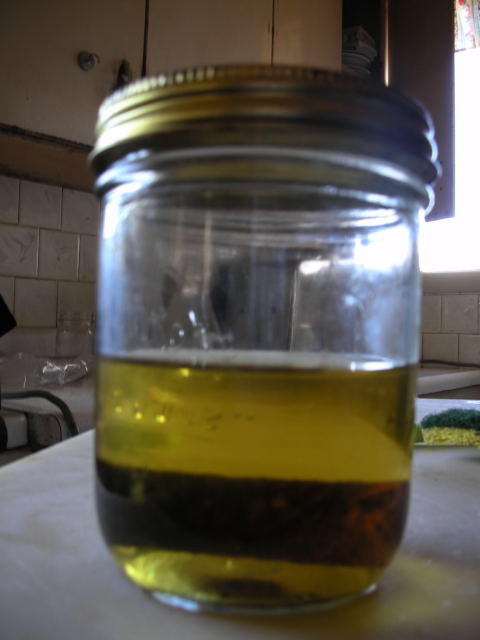
This is the urine vat after 2 hours in the sun and an infusion of sugar. As you can see, it is noticably darker than it was when I started. I hope this shows in the pictures. The cloth is turning color and it is taking on a cast of muddy green. I hope the oxidation works. Keep your digits crossed!

Other projects!


Proof that I can do lampwork! These are various beads I have made over the last 3 months. Obviously, I am just learning and this is going to take a great deal of skill. The two beads on the right are supposed to be fish. Hey, bald guy could tell they were fish so they are fish!

The pink one has ruby dust in it. I think it is ruby glass dust but it is pretty and I love the colors. It is also diachromatic. The brown and white one has a copper fall leaf in it. I think it is spiffy. The two dark beads have diachromatic glass in them. I have found mentions of that effect in beads from throwing in mica dust. I am going to have to look around for some information on that and see if I can find something to add to my body of knowledge. None of these projects was done today. I have been busy making....

Cheese!

Behold the power of Cheese! Here we go with the feta. I did EVERYTHING wrong. I kept going. I boiled the milk. I didn't get everything going in time. I went to get my son at work and left the stove on when it should have been setting UNHEATED for an hour. It was at a mild rolling boil when we got home. GAH!!! I had already put the yoghurt in it! Oh damn. I put it in an ice water bath and cooled it back down to 92 degrees, then I added more yoghurt. I had to hope for the best. My son is a professional chef and tried to get me to give up.


One hour later, I added the junket tablets. I hoped it would work and went to bed. I got up in the morning and read the recipe again. I needed to know if it was time to toss it. I opened the stock pot and gave it a shake. Solid!!! The curds passed the knife test! I carefully cut them up and began to warm them. I got it too hot twice, but that happens with an electric stove. I reduced them down, and hung the curds as seen in the picture.

My next move was to wait 4 hours. I wanted to curds to be very dry for my feta. I am going to be doing some special food that will need a very dry and salted feta. See? I am excited and thinking ahead. The curds are a bit too yellow, which I attribute to the milk having boiled and then cooled. Hey, think sterile!

I picked out brown bits that had snuck in and added about 1/2 teaspoon of Trader Joe's sea salt. Then I tried some. OH! It tasted like feta! How exciting. The whole thing was coming together like it was supposed to do!

Now for the bad part. I wanted to make a horse poo shaped cheese. But, I can't. You see, it isn't even really poo shaped. I was so sad. Eibhlin did the actual research for me and showed me the picture. It turns out that it is an ordinary hockey puck of cheese. No road apples. The French Cheese Book by Tomoko Yamada, Yohei Maruyama, and Kazuko Masui is the book that is shown in this picture.

I decided then that my feta can be any general round shape. I didn't have a can or round big, so I used a flower pot! Don't worry, I keep one around the kitchen for kitchen duties. Terracotta is a handy thing to have in your kitchen.


The pot is lined with an old cotton dishtowel. I wanted to make sure I got it packed down tight in there. I need a firm curd for when I pack it down.


I then squished it down after this picture, and smashed it a bit more. Then I added a thin metal plate and a weight that is actually a tin of oatmeal. I haven't thought of a heavy object that would fit in there. I should see if the old iron works.

The whole thing needs to sit in the refridgerator for a few days to drain the curd. Then it goes into a brine bath until I use it. YAY!

Project day!


I am so excited that this weekend I have taken some time to actually pull out some of my research materials and do this up right. I have been fermenting indigo in urine for several weeks and was hoping to find a piece of silk to dye. It took longer to find the silk than anything else.

I know it doesn't look like much and I am convinced the fermentation stopped at some point. The key is to get the fermentation going to break down the indigo powder. It seems that it stalled. I put the fabric in and I think the mixture was too cold. It should be about 80 to 90 degrees. I was not too concerned though. Living in Napa Valley has taught me a lot about fermentation. It also told me that we had another problem.

Three healthy adults and I contributed to the urine vat. The problem is that I am hypoglycaemic and they are healthy. We needed a diabetic for the extra sugar in the urine. I have had problems with the vat fermenting and I knew it wasn't stalled for heat before. It has been extremely hot here and I have even taken the vat into the blockhouse. So, what I decided was we were short on sugar. I looked it up on the internet and found that a lot of people who do this use mollasses or sugar. I used white sugar because I didn't feel like finding the mollasses. Hopefully, that will kickstart it. I have it back out in the sun.

I will check it in a few days. I would normally check it in the morning but I am heading up to Portland tonight. If it doesn't dye I will wash the fabric and start over. If it does work, it will be insanely dark. Either way, I think I win.

How about for my next project? I decided that I will need an adorable muller like Master Jim Bear has. I really enjoy the feel of things. For example, I wear more natural fibers because they don't make me crazy with the tactile sensations. A muller makes regular gouche less grainy and it makes me happier. Anyhow, I thought I would whip one up with my new glass bead skills. I thought about the color a lot. I should have been thinking about technique.

As you can see on the graph paper, the piece is not very long. It ended up being very lumpy. It looks like there were bubbles in the glass but there are not really any bubbles. It is lumps of clear glass that didn't really turn the way I wanted them to turn. As you can see, it wasn't a pretty piece by any stretch of the imagination, but it did have a serviceable handle and foot. I was going to etch the foot for a better grip on sediment in paint.

Then....

Loser's Excuse:

It shattered. This isn't because of bubbles but because it was a weakly made piece of glass that was not properly oriented. The foot fractured off first, which I thought it would do. It wasn't structurally well-positioned and I had touched it to metal too many times and didn't anneal it properly when it came out. That was the only piece of the muller that touched metal. It is also why the whole project failed.

The rest exploded right after I took the first picture. The problem was that I was trying to do everything without any use of metal or graphite tools. That is just plain silly. For the next idea, I am going to make a sturdy stringer to ballance the foot while I twist the handle and roll it over graphite the whole time. I still think it could be done with lampwork.

By the way, the indigo looks great! It is darkening up as we speak. Sugar and heat save the day!

Saturday, August 12, 2006

A&S pictures! Whooo hoo!


My friend Kate took pictures of me teaching a class on urine and poo. Here is a picture of me with my mouth closed. It is wide open in the other pictures.

It was a gorgeous day and the classes were loads of fun. My parents and neice even showed up! My step-mom is determined to spin wool. She bought a spinning wheel from New Zealand and plans on doing it. I tried to talk her into spinning some wool for me so I could dye it in indigo. She keeps wrinkling her nose about the urine. I don't know why.


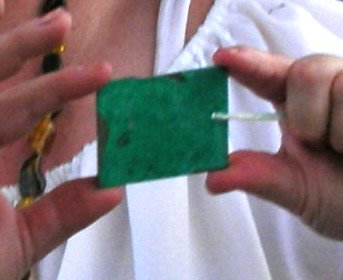
This is a close up picture of the verdigris I made in a jar at home with my very own pee. This does not show the color well-enough. I will get another picture later. Unfortunately, it is in my truck which is at the shop right now.

I am really stoked about the color and I plan on making something with it in the future. I may just be a little panel with only verdigris on it, but I wanted to show everyone what it looked like. I think it turned out really well. I hope to scrape some bits off for Master JimBear. YAY for giving presents!


This is the coyote head I got from Wolf and D out in New Jersey. I had the opportunity to finally meet them face to face two weeks ago. After all these years of emailing back and forth, we finally hooked up in DC. I was beyond thrilled. I carefully didn't mention our poo leather exploits until they brought it up and complained about the stench! HA! I did thank them again and I will be foisting my glass beads on them.

Wednesday, July 26, 2006

Hygiene. Because they had no running water, there was no such thing as flush toilets. Generally sophisticated plumbing facilities were an outhouse built over a cesspit. Those living more comfortably might have a chamber pot which they used in the evening and which would then be emptied into the cesspit in the morning. After defecating, people used hay, straw, grass, or some other vegetation to wipe themselves. Because of a relatively lack of privacy when grooming or attending to basic bodily needs, it appears that people had a higher threshold of embarrassment than modern people. These thresholds also applied to the use of bodily fluids. "Medieval people were not very squeamish about urine: not only was it an essential element in tanning leather and fulling cloth, but the medieval physician's analysis of a patient's urine was expected to take into account taste as well as appearance." (Singman, 50)

http://www.cas.sc.edu/hist/faculty/edwardsk/pubs/dailylife.html


This refers to Jeffrey L. Singman. Daily Life in Medieval Europe. Westport, CN: Greenwood Press, 1999. which I will have to take a look at. Does anyone have it?

Evidence Urine was Period!

"Tell me also, to what purpose or end
The genitals were made, that I defend,
And for what benefit was man first wrought?
Trust you right well, they were not made for naught.
Explain who will and argue up and down
That they were made for passing out, as known,
Of urine, and our two belongings small
Were just to tell a female from a male,
And for no other cause- ah, say you no?
Experience knows well it is not so;
And, so the clerics be not with me wroth,
I say now that they have been made for both,
That is to say, for duty and for ease
In getting, when we do not God displease.
Why should men otherwise in their books set
That man shall pay unto his wife his debt?
Now wherewith should he ever make payment,
Except he used his blessed instrument?
Then on a creature were devised these things
For urination and engenderings."

Geoffrey Chaucer, d. 1400:
Canterbury Tales: Prologue to Wife of Bath's Tale [Modern Version]

Wednesday, June 28, 2006

verdigris

Lovely shiney green!

http://webexhibits.org/pigments/indiv/overview/verdigris.html What a treasure of a website!

Especially prepared in wine-growing areas, because acetic acid is a by-product of winemaking. Copper plates are covered with winemarc and allowed to stand, the resulting acetic acid reacts with the copper, forming a blue to blue-green crust which is scraped off and ground.

This is a particularly interesting since I live in a wine area. I used the urine version which is often used when you don't want to spend cash on vinegar. I just used the jar with stale pee and tied a copper plate on a string. Magge Nettlewood was kind enough to take pictures. Hopefully, we will get those up in the future.

Here is the science part from that website....

Method: The synthesis is done in three steps:


4 CuSO4 + 6 NH4OH --> CuSO4 · 3 Cu(OH)2 + 3 (NH4)2SO4

8,3 g CuSO4 · 5 H2O are solved in 100 ml deionized water and heated to 60 to 80°C. This solution is stirred vigorously while 25% solution of ammonia in water is added dropwise. First precipitate of basic copper sulfate of light blue colour is formed. The addition of ammonia solution is continued until the deep blue colour of the [Cu(NH3)4]2+ complex can clearly be seen (c. 3,6 to 4 ml of ammonia). The mixture is diluted with deionized water to a total volume of 130 ml and stirred for half an hour. After this time the precipitate is let to settle down, washed two times with deionized water, decanted and filtered off and washed again with 300 ml deionized water.

CuSO4 · 3 Cu(OH)2 + 2 NaOH --> 4 Cu(OH)2 + Na2SO4

The damp precipitate is added to 130 ml of deionized water and stirred vigorously while a solution of 1,33 g sodium hydroxide in 16,7 ml deionized water is poured in rapidly. The resulting precipitate of copper hydroxide, which is rather voluminous and might not settle down easily, is washed five times with deionized water, filtered off, pressed with filter paper until dry and used for the next step as soon as possible.

Cu(OH)2 + 2 CH3COOH --> Cu(CH3COO)2 · H2O + H2O
The precipitate from the previous step is first mixed with 13 ml glacial acetic acid and the resulting thin paste is stirred until it is fully homogeneous. The conversion takes between one to one and half hours, during which time the temperature rises to approximatelly 50°C due to the exothermic reaction. Small amount of glacial acetic acid can be added towards the end of the reaction. The green precipitate is filtered off and dried without washing.

I vote that medieval folks decided peeing in a jar is easier. Juana said she thought it was done in a chest and I will look through my stuff to see. The most amazing thing was the color and speed. It only took a few hours to see the reaction. It was amazing!

Monday, June 26, 2006

June Crown

I am taking big steps this week. I have three projects in the works to show people the wonder of bodily fluid use in the middle ages. I am dying with indigo in a urine bath, making verdigris and starting on the gunpowder. I also asked Eliska to be warrented as a scribe. Master Jimbear was there and he immediately volunteered to her that he would oversee my attempt at a scroll and do the calligraphy. I was going to do it, but it would require me learning uncial. He is going to probably be put out, but the point of the scroll will be early period. I have a layout in my mind's eye. I want him to give me his ideas. Now, I just have to do that sketch, send Eliska my contact information, send a class description in to Kira and create an outline and handout. Oh and my neice and I got a gazillion glass rods, several books, tons of amber jewelery and matching mugs.

The first is a bit of verdigris. I got copper plates from the metal shop and they cut them down for me. I cut a smaller piece with my dremel. I then drilled a hole in it and found a piece of wool thread. Actually, it was off of my spindle as I am a failed spinner. I used a canning jar for my experiment, with a good new seal on it. I strung the yarn through the hole in the copper plate. You do not have to soak the plate, you want to suspend it. I figured a canning jar would let me see what happens and allow the plate to fume over the stale urine. I got a canning lid and ring ready to top my jar.

Then I got some stale pee out of my purple bottle. Pee in the purple bottle is always collected right before dawn in silence. I don't normally talk to myself in the bathroom and I get up at 5am so there is a ready supply. This is one of the highest grades of urine. The reason is that it is highly concentrated. We know that
modern times determines pregnancy through the detection of the hormone hCG (Human Chorionic Gonadotropin) in a woman's urine. hCG is secreted by the developing placenta shortly after a fertilized egg has implanted in the uterine lining. Medical researchers generally seem to find concentrations of bacteria in morning urine. Is urine sterile? Sometimes. If you have an infection it isn't and you probably don't know if you do. I assume it is not sterile.

Oddly, serum proteins or
albumin doesn't seem to change that much between first morning and later in the day. I am going to ask around more because that seems odd to me. The kidneys regulate blood acidity by excreting excessive alkaline salts when necessary. The chief constituent of the nitrogenous wastes in urine is urea, a product of protein decomposition. Urea is, among other things, a diuretic. Average adult urine production is from one to two quarts a day. The bladder, where urine is stored for discharge, holds on average about 16-20 ounces of fluid, though the average discharge is about half that amount. In addition to uric acid, ammonia, and creatine, urine consists of many other waste products in minute quantities. Basically, your kidneys work all night and the urine in your bladder is less active. You aren't running around or working in your sleep. Also, people tend to drink less during their sleep cycle than the rest of the day because...duh you are asleep! It works out to about half the volume you produce during the day, at night. Anyhow, there is more urea, uric acide, amonia and creatine in the morning and many medieval things depended on having the best or most pure source of these things for the best chemical reaction. The medieval recipe was chemically correct and the use of first morning's urine is sound. The romanticism of 'collected in total silence' is probably just good manners. After all, you shouldn't be babbling while peeing in a pot when everyone else is trying to get that last bit of sleep.

Knowing all of this, I put the stale first morning urine in the jar, suspended the plate and sealed it. Then I had to find a place in my house where the five adult cats and four kittens wouldn't tip it over or knock it down. I found a bookshelf they ignore and tucked my jar on top of it. A few hours later, I looked up from cleaning that room and was shocked to see that the copper plate look corroded. Wow! It probably only took 3-4 hours to see results. Currently the plate is a blackish green. I am going to do the scraping soon.

The vat of fermenting urine gathered from many people is ready to go. I can put the indigo in any day now, but I want to find my bolt of silk and get it ready for dying. I want a nice, solid blue. I probably only have enough for a tunic. I need to think up trim. That is going to have to be another project. Maybe leather done with dog poo? Maybe dye some cotton, linen, silk or wool thread in the indigo? I keep stalling on getting this done. It needs a few days to prepare and I just need to kick myself in the ass.

Finally, there is gun powder. I have a manure pile but I need to put it under cover and pour urine in it to boost the crystals. Either that, or go find a local barn with a manure pile. Mine is being slow and stupid.